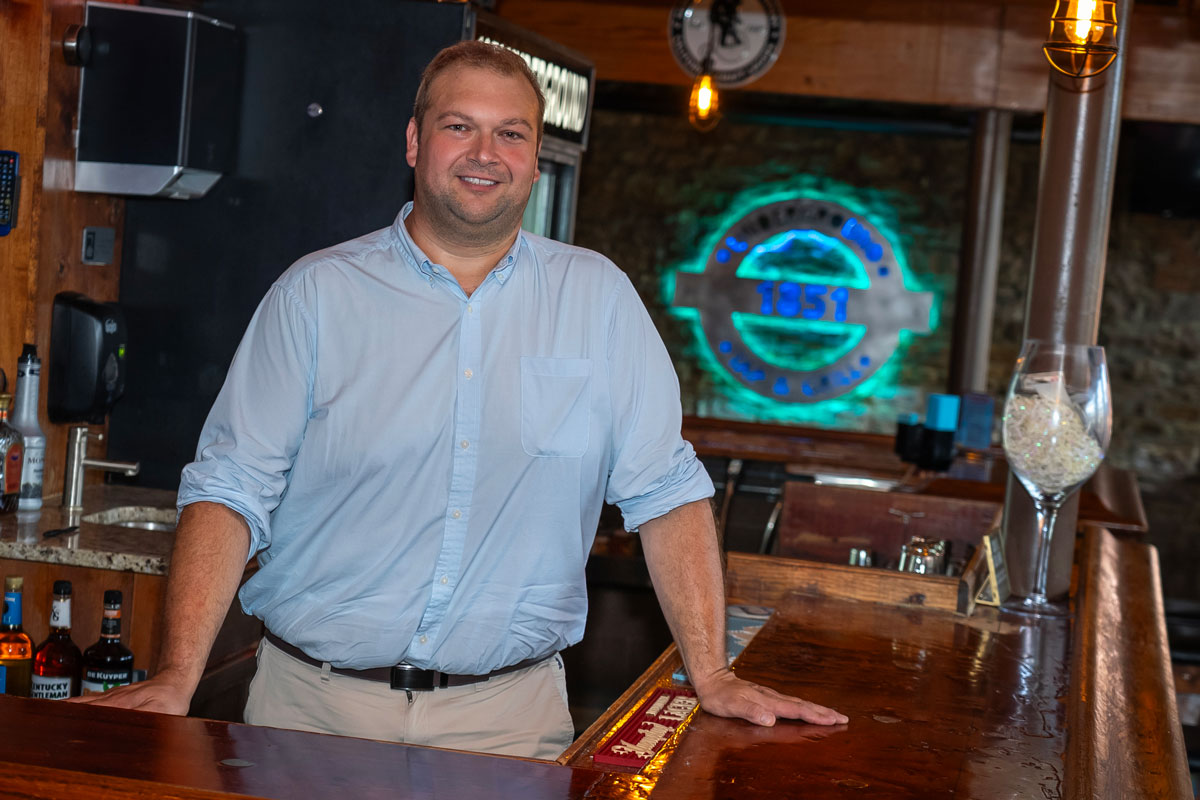
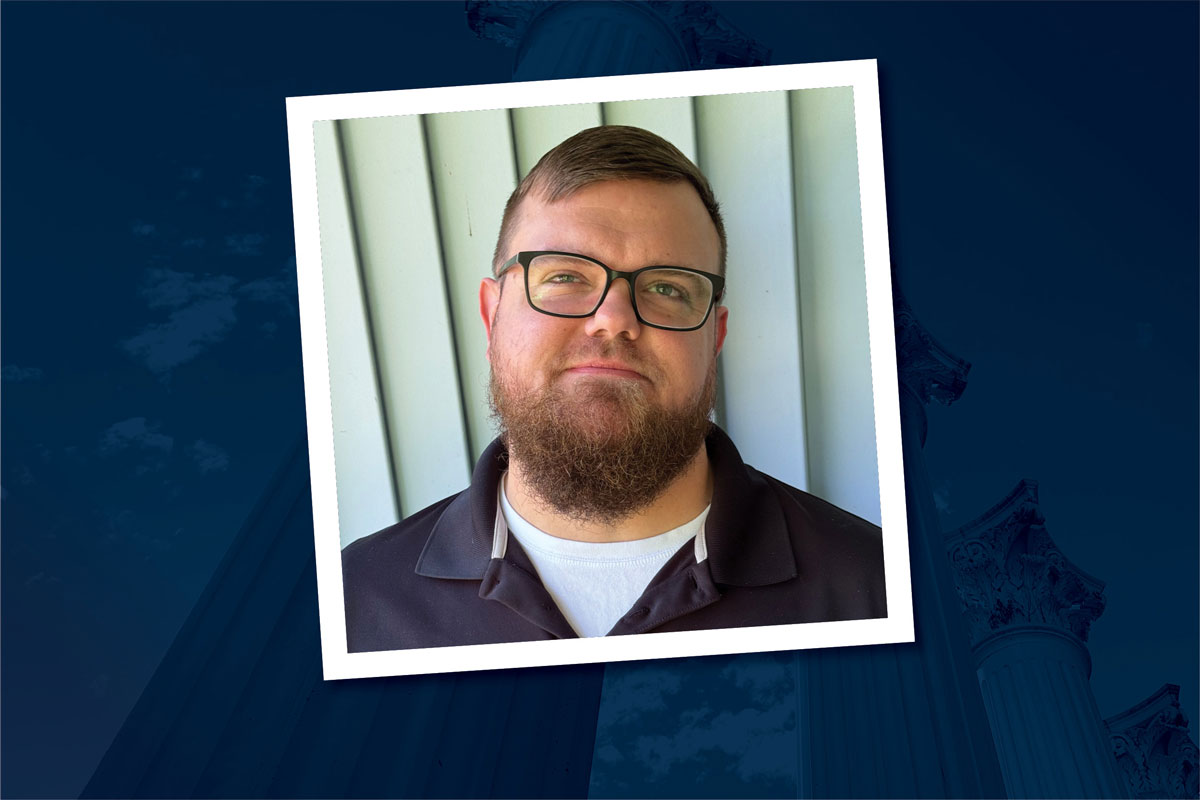

Joseph Widner ’13 graduated from the University of Missouri-Kansas City School of Law in 2017 after double-majoring in philosophy and political science while being active in Phi Delta Theta at Westminster. Yet his relationship with the College didn’t end at the Columns Ceremony.
Widner recently collaborated with Drs. Tobias Gibson, James McRae and Jeremy Reed on “Get after it then!”: Essays on the Themes and Charm of Letterkenny, which was published on June 18.
The former attorney, who four years ago found a new calling in teaching, says his chapter contribution to the book was more than a one-and-done project. The experience is a reflection of the enduring relationships that happen at Westminster year after year, where faculty become lifelong friends and mentors.
Westminster caught up with Widner this summer, just before he resumes his responsibilities as a sixth-grade writing teacher at Lewis and Clark Middle School in Jefferson City, Missouri. He discussed his Westminster faculty friendships, his book chapter and his love of Letterkenny. Read the conversation below.
As an alum, how do you feel about collaborating with Westminster faculty?
Westminster has truly had (and continues to have) an extraordinarily profound impact on my life, and one of the biggest contributors to that impact is the quality of the professors I had there. There were a quite a few of them, but I happened to spend most of my time in class with Dr. Gibson, Dr. John, Dr. Geenen and Dr. McRae.
The four of them taught me to think critically and really helped me formulate my own views about the world. The things I learned from them prepared me not only exceptionally well for law school, but really every stage of life that has come after. I have a tremendous amount of respect and admiration for all four of them, and having the opportunity to contribute to a project with two of them now (Dr. Gibson and Dr. McRae) is very, very cool. It has been a privilege, and very personally rewarding.
Dr. Gibson, in particular, was the driving force behind this project and my involvement in it, and I thank him for that. He continually goes above and beyond for the College in countless ways, and I believe he is one of Westminster’s greatest assets.
How long have you been a Letterkenny fan, and have you binge-watched the series more than once?
I watched the first two or three seasons before Dr. Gibson brought up the idea of my being a contributor to the project. Since then, I think I’ve made it through the entire series twice.
What was the most enjoyable aspect of writing your chapter?
For me, I think the most enjoyable aspect was feeling like I was doing academic work again. I hadn’t done anything very similar to that since college and law school, and I really enjoyed flexing those muscles again. And getting to watch Letterkenny as part of my research wasn’t too bad. For me, at least, there is also a negative side that comes with any project like this. I never feel like I’m “finished” because I always want to keep making changes and revising things until it’s “perfect.” Thankfully, deadlines exist.
What is your particular chapter about, and how did you do your research?
My chapter is about how communities sometimes make and enforce rules without relying on any formal legal system, and it utilizes Letterkenny as an example of that. The initial idea for the chapter was actually Dr. Gibson’s.
At the time, I was interested in finding a teaching position somewhere, and I had reached out to him for advice. We corresponded through email and met for coffee a few times, and during that process, he asked if I was interested in contributing to this project (which would help make me more marketable as I applied to teaching positions).
He brought up the idea he had been toying with and asked if I was interested in taking it further and turning it into a chapter, which of course I was very interested in! From there, I read the book which had spurred his initial idea and got caught up on Letterkenny. There are also actually one or two sources I discuss in the chapter that I remember reading in philosophy classes at WestMO!
For more information on the transformative academic programs Westminster faculty oversee, please visit the College’s website.


Sarah Rummel Backer is the Director of Media Relations and Senior Writer at Westminster College in Fulton, Missouri. A proud Westminster graduate, Sarah has more than 20 years of experience in marketing and strategic communications in the areas of higher education, medicine, agriculture, and the private business sector.